8 Anniversary Photo Album Ideas to Try
Explore 8 anniversary photo album ideas, from timelines and recreated moments to family legacy books, digital galleries, captions, and guest uploads.
Your anniversary photos are probably scattered across more places than you'd like to admit: current phones, old prints, family group chats, cloud folders, and relatives' devices. Before choosing a cover or layout, decide what story you want the album to preserve. That choice determines what you collect, how you sequence it, which captions you request, and whether a printed book, digital gallery, or combination of both will serve your family best.
These anniversary photo album ideas are organized around six kinds of stories: time, place, family, everyday life, written memory, and digital participation. You'll find approaches for a complete relationship record, a playful side-by-side comparison, a travel archive, a multigenerational keepsake, and a collection built from the moments that rarely make formal albums.
EventUploader can help gather guest contributions through one branded upload page, link, or QR code. Invitees can upload directly from their phones without installing an app or creating an account, which makes it practical for relatives who aren't comfortable with complicated sharing tools. If you're also choosing an anniversary present, a thoughtful album can sit alongside ideas such as meaningful 6 year anniversary gifts.
Table of Contents
- 1. Chronological Timeline Album
- 2. Recreated Moments Album
- 3. Adventure and Travel Memories Album
- 4. Family Legacy Album
- 5. Date Night and Everyday Moments Album
- 6. Themed Collections Album
- 7. Letter and Memory Album With Photos
- 8. Interactive and Digital Anniversary Album
- Comparison of 8 Anniversary Photo Album Ideas
- Turn Scattered Photos Into a Shared Keepsake
1. Chronological Timeline Album
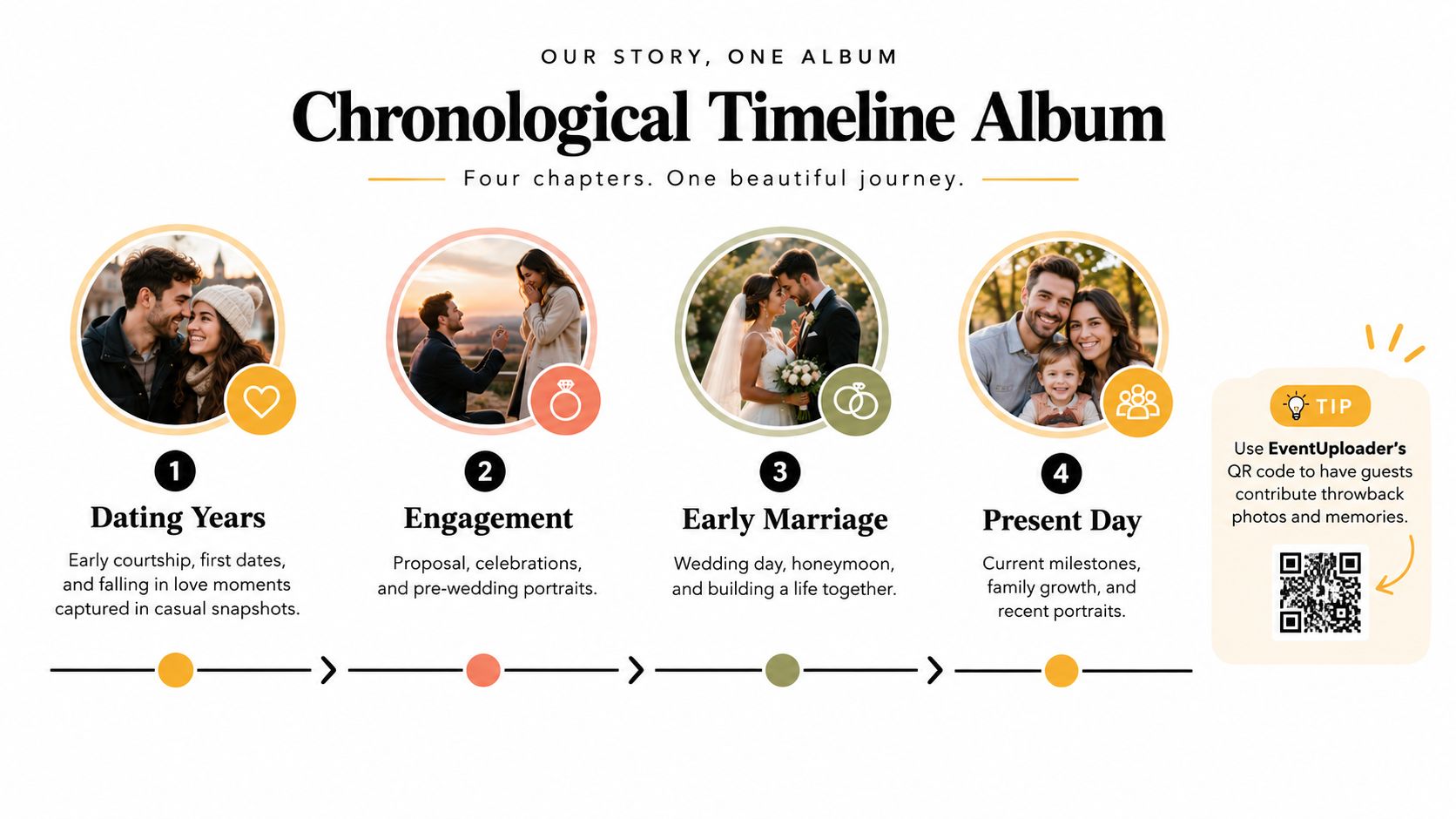
A chronological album gives scattered photographs a clear beginning, middle, and present-day perspective. Start with dating or early courtship, move through the wedding and major life changes, then end with the anniversary celebration itself. For a 25th anniversary, that might mean a timeline from 1999 to 2024, divided into relationship chapters rather than forcing every year to receive equal space. A 50th anniversary book could begin with wedding-day portraits and continue through family photographs, homes, holidays, and recent celebrations.
The traditional anniversary framework gives this format a useful visual vocabulary. Hallmark's anniversary guide connects the 1st anniversary with paper, the 5th with wood, the 10th with tin or aluminum, the 15th with crystal, the 20th with china, the 25th with silver, the 40th with ruby, the 50th with gold, and the 60th and 75th with diamond. A milestone album can borrow those associations through paper-texture details, wood-toned layouts, metallic accents, or ruby and gold color palettes.
Practical rule: Use the dates to create structure, not to turn the book into a yearbook.
Create section dividers with a date, location, and short milestone label. Mix formal wedding portraits with imperfect candid images, because the contrast shows how the relationship changed while remaining recognizable. EventUploader's QR code can collect throwback images from relatives before the design begins, including photographs that never made it into the couple's own archive. Ask contributors to identify people and explain where each image was taken. Those small details will matter more than decorative borders when the album is opened years later.
2. Recreated Moments Album
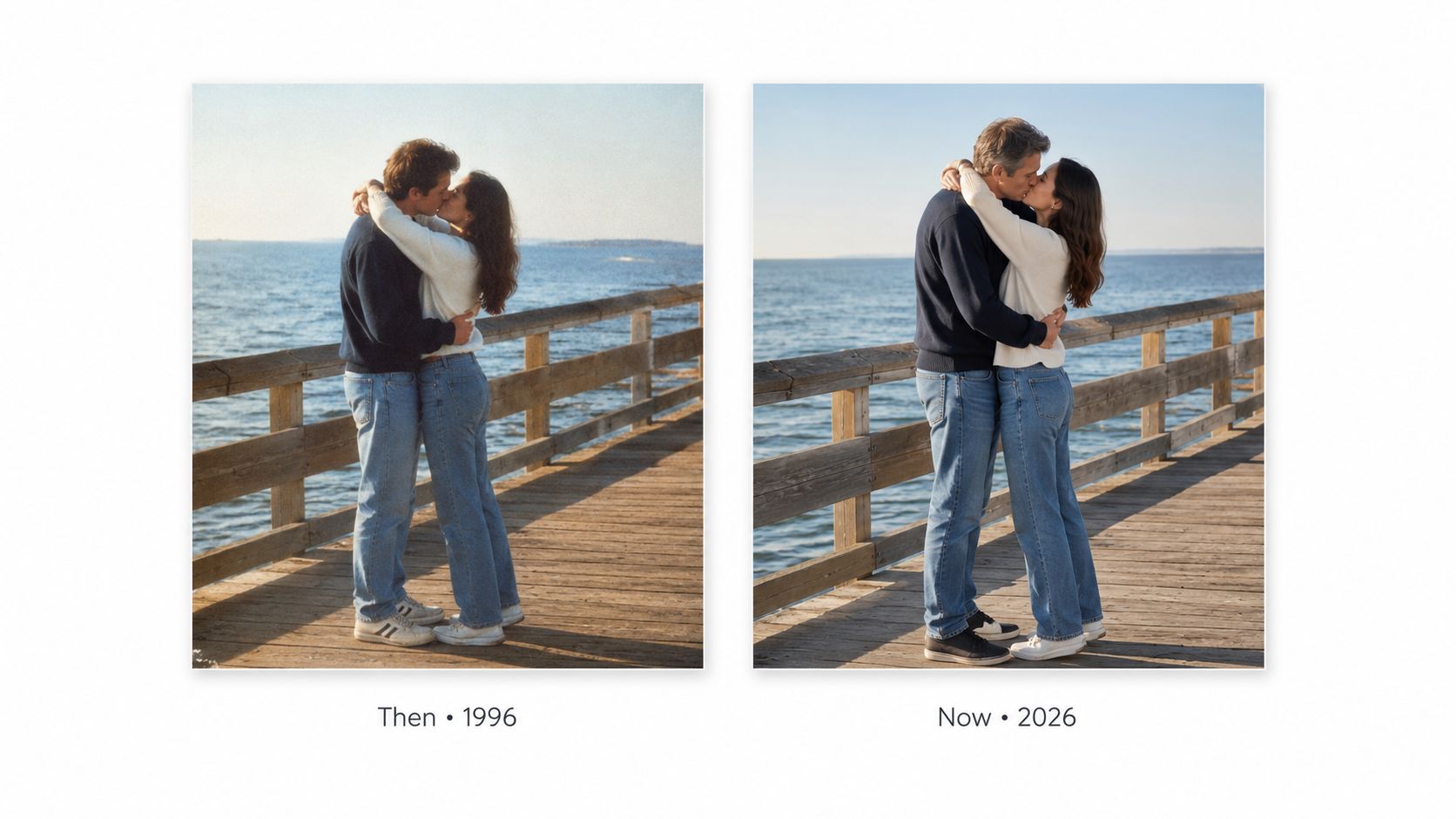
Some photographs become more powerful when you place the past beside the present. A recreated-moments album pairs an original image with a new photograph made in the same location, using a similar pose, composition, or visual detail. The result can be tender, funny, or both. A couple might recreate their wedding-day kiss at the same venue decades later, return to a favorite vacation setting, or stand in the same spot where they first posed together.
Choose source photographs with recognizable backgrounds. A distinctive doorway, wooden pier, park bench, kitchen, or shoreline gives the comparison an immediate visual anchor. If the original image has a memorable color scheme, repeat it without trying to create an exact costume replica. Similar clothing colors often provide enough continuity while allowing the new image to look natural.
Build the spread around contrast
Place the original on the left and the recreation on the right, then add the date beneath each image. Keep the captions short and specific. “The pier was empty after the rain” says more than “A special memory.” A playful note about changed hairstyles, new family members, or a location that has been renovated can give the page a voice.
This format works best when the photographer preserves the original framing. Mark the camera position or save a reference crop before taking the new photograph. For a meaningful scene, consider using a professional photographer so exposure, composition, and image quality don't distract from the comparison.
The trade-off is that recreation requires preparation. You may need to revisit a location, find similar props, or accept that a once-familiar setting has disappeared. Don't force an exact match when the place has changed. A new photograph showing the couple in the altered setting can tell a richer story than a staged imitation.
Pair the images with one or two original prints, letters, or location notes if they exist. The album then records not only how the couple looks different, but also how their surroundings and shared routines have evolved.
3. Adventure and Travel Memories Album
A travel album tells the relationship through movement. Instead of asking which year a photograph belongs to, ask which journey, destination, or shared challenge it represents. This approach suits couples whose strongest memories involve road trips, anniversary getaways, long walks, family holidays, or places they returned to repeatedly.
Organize the book by trip or destination, with each chapter following the actual rhythm of travel. Open with a departure image, map, ticket, or packed-bag detail. Follow it with meals, local streets, unplanned encounters, and one or two portraits that show how the couple experienced the place together. A destination chapter should feel like a short visual essay, not a pile of scenic photographs.
Give every destination a reason to matter
A caption system keeps attractive but anonymous travel images from losing their meaning. Request the date, location, traveling companions, and reason the place remains important. “Our first anniversary trip” provides useful context. “The morning we decided to move” explains why a quiet view belongs in the album.
A world map can introduce the collection, but it shouldn't replace captions. Add boarding passes, handwritten directions, restaurant cards, museum tickets, or small scans of travel memorabilia when they still exist. Use these elements sparingly so the pages don't become cluttered.
For couples who take annual anniversary trips, a repeating layout can show the ritual clearly. Give each journey the same opening treatment, then vary the photographs and colors according to the destination. For a 10th-anniversary book, paired images from the beginning and end of the decade can show how travel style, companions, or priorities changed.
EventUploader can serve as the collection point when relatives contribute photographs from shared holidays. Its guidance on building a photo and video gallery is useful when the archive includes short videos as well as still images. Keep the print album selective, and preserve the larger collection digitally so the book remains readable rather than overloaded.
4. Family Legacy Album
A family legacy album places the couple at the center of a growing family story. It can begin with the two of them as newlyweds, then introduce children, grandchildren, extended relatives, family homes, reunions, and the ordinary scenes that show relationships developing over time. This is especially fitting for a 40th, 50th, or 60th anniversary, when the album can connect multiple generations without reducing the couple's own story to a single wedding chapter.
One structure is chronological. Another is organized by generation, with a chapter for the couple, a chapter for their children, and later sections for grandchildren and wider family gatherings. A family tree can appear near the front, but use names and relationships in captions throughout the book too. Future readers shouldn't have to guess who appears in a group portrait.
Ask every branch of the family to contribute
Set up a simple request for original photographs, then invite relatives to add the names, approximate date, location, and story behind each image. A QR code at a family reunion can collect photographs while people are already looking through their phones. EventUploader's advice on family picture sharing can help organizers create a contribution process that doesn't depend on one person having every family photograph.
A 50th-anniversary album might include wedding portraits, photographs of adult children, grandchildren, family homes, scanned letters, and current celebration images under a gold visual identity. Don't let formal group photographs take over. Balance them with grandparent moments, kitchen scenes, school milestones, holiday gatherings, and images that show affection between relatives.
This format has a genuine archival purpose. Available milestone data estimates that about 33% of marriages reach 25 years, 16% reach 40 years, 6% reach 50 years, and roughly 2% reach 60 years, as reported in anniversary milestone data from Strictly Weddings. A long-marriage album can therefore function as more than a party favor. It becomes a deliberate record of a shared history that fewer couples reach.
Use full names where appropriate, but respect family privacy. Ask before including children, sensitive circumstances, or photographs intended only for private viewing.
5. Date Night and Everyday Moments Album
Formal portraits show how a couple presents themselves. An everyday-moments album shows how they actually live together. It might follow morning coffee, cooking, gardening, dog walks, favorite restaurants, quiet evenings, weekend errands, or the small rituals that would never appear in a professional anniversary shoot.
Smartphone photographs are often ideal for this format because they preserve the spontaneity of the moment. A slightly imperfect image of one partner reading at the kitchen table may carry more emotional weight than a carefully posed portrait. The important work happens during selection. Choose photographs that reveal a habit, place, or shared joke, not merely every attractive image taken at home.
Create a repeatable capture system
Pick a few recurring themes before searching the archive. “Our favorite dates,” “Sunday mornings,” and “Home life” are clearer than a broad category such as “memories.” You can also organize by year to show how a routine changed, or by activity to emphasize continuity across the relationship.
Ask for a short caption with each upload:
- What happened: Record the occasion or routine in plain language.
- Where it happened: Add the home, restaurant, neighborhood, or trip location.
- Why it matters: Explain the private meaning that isn't visible in the image.
The trade-off is visual consistency. Phone cameras, lighting conditions, and image sizes will vary, so a rigid design may make the collection feel awkward. Use a restrained layout, consistent caption placement, and generous white space to create unity without pretending every photograph was made under the same conditions.
Avoid filling pages with near-duplicates. One photograph of a familiar breakfast table can establish a ritual. A sequence of similar images is useful only when the changes across time are part of the story. The finished book should feel intimate, not like an unedited camera roll.
6. Themed Collections Album
A themed album organizes photographs by an idea rather than a date. The theme might be seasons, shared activities, colors, locations, or emotional qualities such as laughter, quiet, adventure, and tenderness. This structure creates a gallery-like experience and works well when the archive contains strong photographs from different periods but no complete chronological record.
Choose themes that already exist in the couple's life. A hiking section, cooking section, beach section, and concert section will feel authentic if those activities recur in the photographs. A color-led album can gather blue-hour scenes, golden light, garden greens, or sunset tones, but don't sacrifice meaningful images because they don't match the palette.
Edit for visual balance
Four to six clear themes are usually easier to understand than a long list of narrow categories. Give each section a distinctive opening page and a short explanation of why it belongs in the book. A photograph of muddy boots can introduce an outdoor chapter more effectively than a decorative title alone.
Within each theme, mix scale and mood. Use one strong image as a visual anchor, then support it with smaller candid photographs, details, and portraits. Full-bleed images need breathing room. Close-ups of hands, food, tools, or travel objects can work well as transitions.
A theme should reveal something about the relationship, not just group photographs by color.
The main trade-off is context. A chronological book explains when things happened almost automatically. A themed book needs captions and section introductions to preserve that information. Add dates and locations even when they aren't the organizing principle.
This format is also a good choice for a shorter companion book. The complete relationship archive can remain chronological, while a carefully edited themed volume focuses on the couple's shared passions. Use consistent borders, typography, and color treatment, but let each chapter have enough visual variation to avoid looking like a catalog.
7. Letter and Memory Album With Photos
A photograph records what was visible. A letter explains what the moment felt like, who remembers it, and why it still matters. This hybrid format combines photographs with handwritten notes, renewed vows, stories from friends, and messages from children or grandchildren. It can become one of the most personal anniversary keepsakes because the pages preserve voices as well as faces.
Start by choosing the album's written contributors. The couple might write a memory for each major chapter, while relatives contribute letters about the relationship's influence on the family. Friends who attended the wedding or shared important stages of the couple's life can add context that the couple no longer remembers.
Give contributors a useful prompt
Open-ended requests such as “Send a memory” often produce short, generic responses. Ask focused questions instead:
- What do you remember about the couple when they first met?
- Which photograph best represents them to you?
- What ordinary habit captures their relationship?
- What have they taught your family?
- What do you hope they keep doing together?
EventUploader can collect digital stories and memories before the physical design begins. Contributors can upload a photograph with their text, while people with handwritten material can scan or photograph the page. Preserve the original handwriting where it adds character, but transcribe difficult-to-read passages when future readers may struggle with them.
Pair one substantial letter with each major section rather than placing dense text beside every image. A page overloaded with writing can stop feeling like an album, while captions without enough detail can leave the stories flat. Use consistent paper tones, spacing, and typography, then reserve calligraphy or decorative handwriting for chapter openings and short headings.
8. Interactive and Digital Anniversary Album
A digital album is useful when the people who need to see it live in different places. It can combine a private gallery, video montage, interactive timeline, captions, comments, and photographs that wouldn't fit in a printed book. It also allows relatives to keep adding memories after the anniversary, although that convenience creates preservation and privacy responsibilities.
Use a collection hub first, then design the presentation. EventUploader can gather photographs and videos through a branded page, link, or QR code, while the final gallery or slideshow can be organized after the strongest material has been selected. A private shared album workflow can help families decide who may view, download, or contribute.
Design for real family behavior
Most guests will open the album on a phone, so use short sections, readable captions, and clear navigation. A timeline slider might suit a complete relationship history. A chapter-based gallery can work better for travel or family photographs. A video montage can add music and movement, but it shouldn't replace still images that carry important details.
Choose a platform with privacy controls and a clear ownership plan. Decide who can upload, who can view, whether comments are moderated, how long files remain available, and how someone can request removal. A 2025 survey of more than 2,000 UK parents found that 48% were unaware that major cloud services may access uploaded photos and associated data, according to Proton's photo privacy research. That gap makes explicit consent especially important when children or private family circumstances appear in the collection.
Digital preservation needs an exit plan. Keep the original-quality files separately, export a print-ready master, and maintain at least two independent copies. A broader archive is safer than relying on a single platform, password, or family member's account. For a lasting gift, pair the digital album with a printed selection. The book provides a stable, tactile entry point, while the gallery holds the larger collection and ongoing contributions.
Comparison of 8 Anniversary Photo Album Ideas
| Album Type | 🔄 Implementation Complexity | ⚡ Resources & Time | ⭐ Expected Outcomes | 💡 Ideal Use Cases | 📊 Key Advantages |
|---|---|---|---|---|---|
| Chronological Timeline Album | Medium, sourcing and dating photos takes effort | Moderate, scans, captions, design time | High sentimental value; clear narrative of relationship | Milestone anniversaries (25th, 50th), retrospectives | Shows progression clearly; easy for guests to follow |
| Recreated Moments Album | High, locating/recreating original scenes is laborious | High, travel, staging, professional shoots often needed | Very engaging and nostalgic; strong before/after contrast | Couples who enjoy playful nostalgia and social sharing | Strong visual impact; memorable conversation starter |
| Adventure & Travel Memories Album | Medium, organizing by trip or location | Moderate, curating many travel images, maps, memorabilia | Visually striking; celebrates shared experiences | Travel-loving couples, destination anniversaries | Inspires future travel; visually diverse and appealing |
| Family Legacy Album | High, coordinating multi-family contributions | High, collecting, curating, and managing permissions | Deeply meaningful multi-generational record | Family reunions, milestone anniversaries with children/grandchildren | Preserves family history; meaningful across generations |
| Date Night & Everyday Moments Album | Low, candid, phone-shot collection is simple | Low, mainly smartphone photos and quick curation | Authentic, relatable emotional impact | Couples who value daily life and intimate moments | Genuine and quick to compile; emotionally powerful |
| Themed Collections Album | Medium-high, requires deliberate curation and consistency | Moderate, sorting across years and design work | Visually cohesive, artful storytelling | Design-conscious couples; albums focused on interests or aesthetics | Stylish, customizable, strong aesthetic cohesion |
| Letter & Memory Album with Photos | High, gathering handwritten notes and pairing with photos | High, coordination, scanning, and premium production | Extremely personal; preserves stories and emotions | Keepsake-focused couples; family heirloom projects | Narrative depth and authenticity; multi-voice perspectives |
| Interactive & Digital Anniversary Album | Medium, depends on chosen platform and features | Low–Moderate, digital uploads, privacy setup, optional multimedia | Highly accessible and shareable; dynamic and updateable | Distributed families, tech-savvy couples, ongoing projects | Shareable, searchable, integrates video/music with low print cost |
Turn Scattered Photos Into a Shared Keepsake
The best album isn't the one with the most photographs. It's the one with a structure that helps people understand why the images belong together. Choose a chronological timeline when you want a complete relationship record. Choose recreated moments when visual contrast and humor matter more than coverage. Choose travel memories when places and journeys define the couple's shared history.
A family legacy album is the strongest fit for a milestone celebration involving several generations. An everyday-moments album creates a quieter, more intimate portrait of partnership. A themed collection suits couples with distinctive interests or a strong visual style. A letter and memory album adds emotional context that photographs cannot provide on their own. An interactive digital album works well when relatives are spread across locations or when the collection will continue growing after the event.
Choose one primary structure before collecting everything. You can combine formats, but the album needs one organizing idea so the selection process doesn't become endless. Set a collection deadline, give contributors a clear prompt, and request a caption with every upload. Ask for original-quality files whenever possible, then separate the complete archive from the smaller set chosen for print.
For long-term preservation, specify acid-free, lignin-free paper and pigment-based inks when ordering an heirloom book. The Northeast Document Conservation Center's guidance on inkjet prints recommends evaluating permanence against recognized criteria and managing storage conditions. Keep the album away from direct sunlight, preserve the digital originals separately, and add dates, locations, and contributor names so future family members can interpret the pages.
Don't treat print and digital as competing choices. A printed album protects the central story from account changes and forgotten passwords, while a digital archive can preserve extra candid photographs and videos. A widely cited preservation concern is that only 3% of Americans reportedly store images in printed form, while more than half have deleted or lost photos because of storage limits, phone changes, or damage, as described in TechRadar's photo preservation report. The practical answer is a curated printed keepsake paired with a documented digital archive, not reliance on either format alone.
EventUploader can support the collection stage with a branded upload page, printable QR code, live dashboard, and original-quality exports. After curation, families can use the same link for a shareable gallery, giving guests a way to revisit the celebration without sending files through multiple group chats. The tool solves the gathering problem, but the meaning still comes from your editing, captions, consent decisions, and care with preservation.
Start by choosing the story. Create a folder for original files, decide who can contribute, and write the closing date on your planning calendar. Then select the photographs that make the relationship recognizable, whether they show a wedding day, a family kitchen, a distant shoreline, or two people returning to the same old pose.
Use EventUploader to collect anniversary photographs and videos through a branded upload page, one link, or a QR code, with no app or account required for guests. Gather contributions in original quality, curate the strongest images, and share the finished memories through a gallery on the same link by visiting EventUploader.