How to Plan a Family Reunion That Everyone Enjoys
Learn how to plan a family reunion step by step, from budgeting and venue selection to capturing every photo and memory without chasing group chats.

Your cousin starts a group chat to plan a family reunion. Someone suggests a weekend, three relatives vote for different dates, an aunt asks about costs, and then the conversation disappears under photos and unrelated messages. Six months later, nobody knows whether the reunion is happening.
The fix isn't another chat. It's a written plan, clear ownership, and decisions made in the right order. If you're learning how to plan a family reunion, start with the people who might come, then work through timing, money, access, the day's schedule, and how everyone's photos will be gathered afterward.
Table of Contents
- Starting a Reunion Plan That Actually Sticks
- Building the Save-the-Date, Invitation, and Logistics Packet
- Setting a Real Budget and Making It Equitable
- Designing the Day Around Capacity and Generations
- Planning Accessibility Beyond Ramps and Restrooms
- Collecting Every Photo and Video in One Place
- Closing the Reunion and Setting Up the Next Host
Starting a Reunion Plan That Actually Sticks
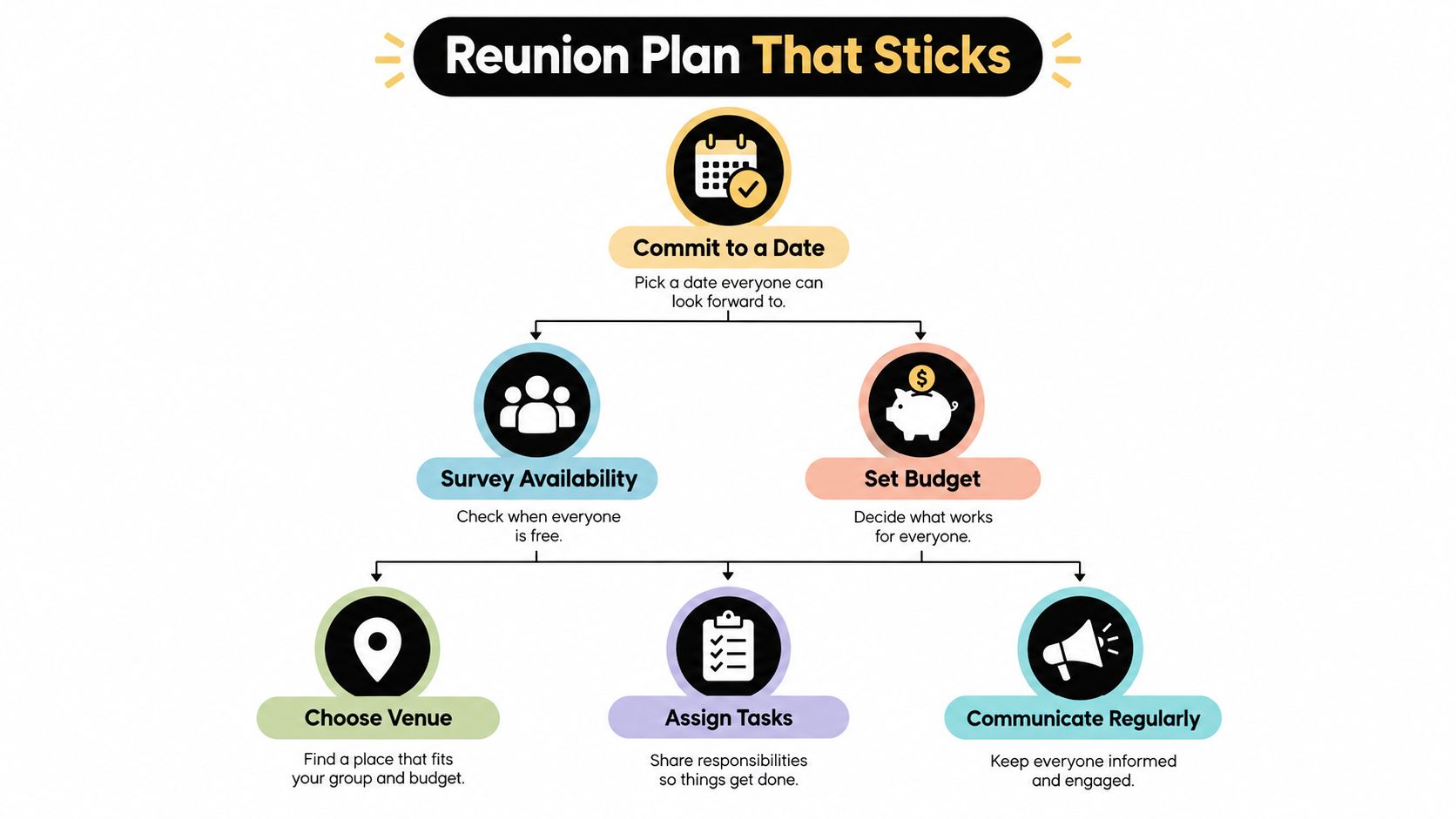
A reunion doesn't need a huge committee, but it does need someone who's responsible for keeping decisions moving. Name a chair, then recruit leads for communications, finance, food, activities, and logistics. One person can cover more than one job, but don't leave every task with the relative who happened to start the group chat.
Before you browse venues, agree on the event's purpose and whether you're planning a one-off gathering or hoping to make it recurring. A backyard afternoon, a destination weekend, and an annual family tradition call for different budgets and levels of coordination. Families considering a getaway can compare the trade-offs involved in planning a multigenerational resort stay before deciding whether a destination format fits their relatives.
Get the people picture before choosing a place
A lifetime attendance figure can make a reunion seem more predictable than it is. A nationally representative YouGov survey of 1,000 U.S. adults found that 71% had attended a family reunion at some point, while 23% had attended one in the previous year, a difference that's a good reason to confirm interest before booking a venue or ordering food (YouGov's survey on attendance at social occasions).
Start with a short availability survey, not a list of assumptions. Ask which dates work, which households expect to attend, where relatives would travel from, and whether they prefer a day gathering or an overnight event. Use prior reunion records if you have them, but treat them as context rather than a promise that the same people will come again.
Put the answers in a shared planning document. Record the purpose, date options, estimated attendance range, likely travel needs, committee assignments, and decisions that still need approval. A shared online event-planning tool can help keep working details in one place instead of scattering them across chat history.
Practical rule: Don't sign a venue contract until you've asked relatives what they can attend and what kind of gathering they can afford.
Building the Save-the-Date, Invitation, and Logistics Packet
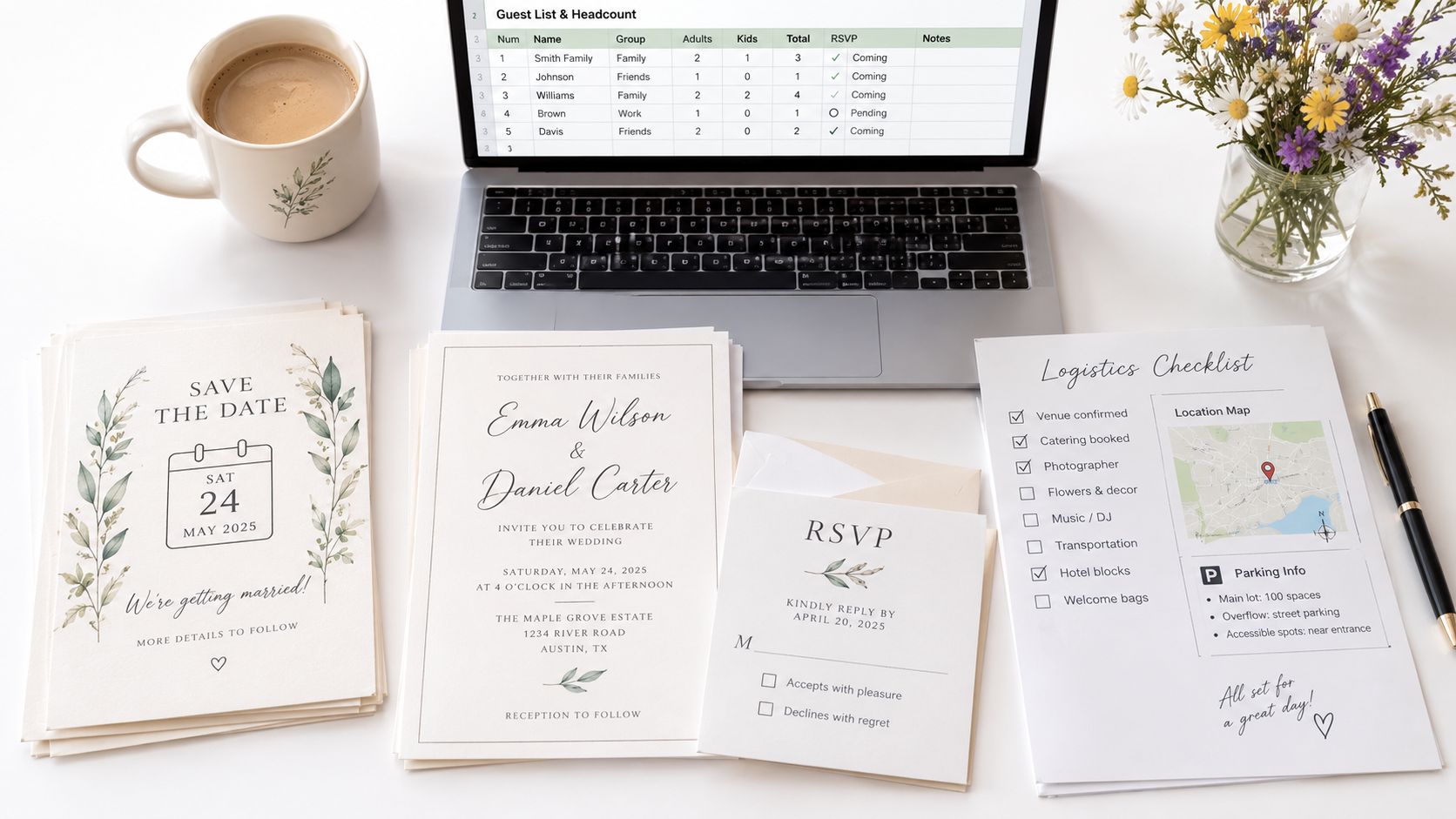
One invitation can't do every job. Send three communications, each with a clear purpose, so relatives get enough notice without having to hunt through old messages for the final details.
Send the save-the-date first
For a typical reunion, start 10–12 months ahead with a brief save-the-date: the date, city, and broad purpose. Don't present tentative venue or cost details as settled facts. For a large or destination reunion, begin 18–24 months ahead so relatives have more room to coordinate travel and you can investigate venue availability.
Offer two or three date choices before committing. Then ask households to respond through one channel and record the replies. That's more dependable than treating a few enthusiastic messages in a group chat as a headcount.
Make the detailed invitation do real work
Send the full invitation about six months before the event. Include the venue, lodging information, schedule, cost, RSVP deadline, dietary questions, and accessibility questions. Make the RSVP form useful to the people running the reunion: ask for household size, ages, mobility needs, food restrictions, lodging requirements, and arrival and departure times.
Use a reunion RSVP link to collect those details in a consistent format. Set a firm deadline, then personally follow up with nonresponders. “Maybe” isn't a catering number, a room count, or a reliable basis for a payment request.
Close the loop before guests travel
Send a final logistics packet 2–4 weeks before arrival. Include parking instructions, weather contingencies, packing guidance, child-friendly information, and a day-of contact tree. Give relatives one clear place to check for updates, and name the person who'll answer urgent questions during the event.
A headcount built on optimistic guesses can leave organizers paying for more than the family uses. Keep a written budget with at least a 10% contingency reserve, as recommended in family reunion planning guidance. A final RSVP deadline and personal follow-up make that reserve a safety net, not a substitute for knowing who's coming.
Setting a Real Budget and Making It Equitable
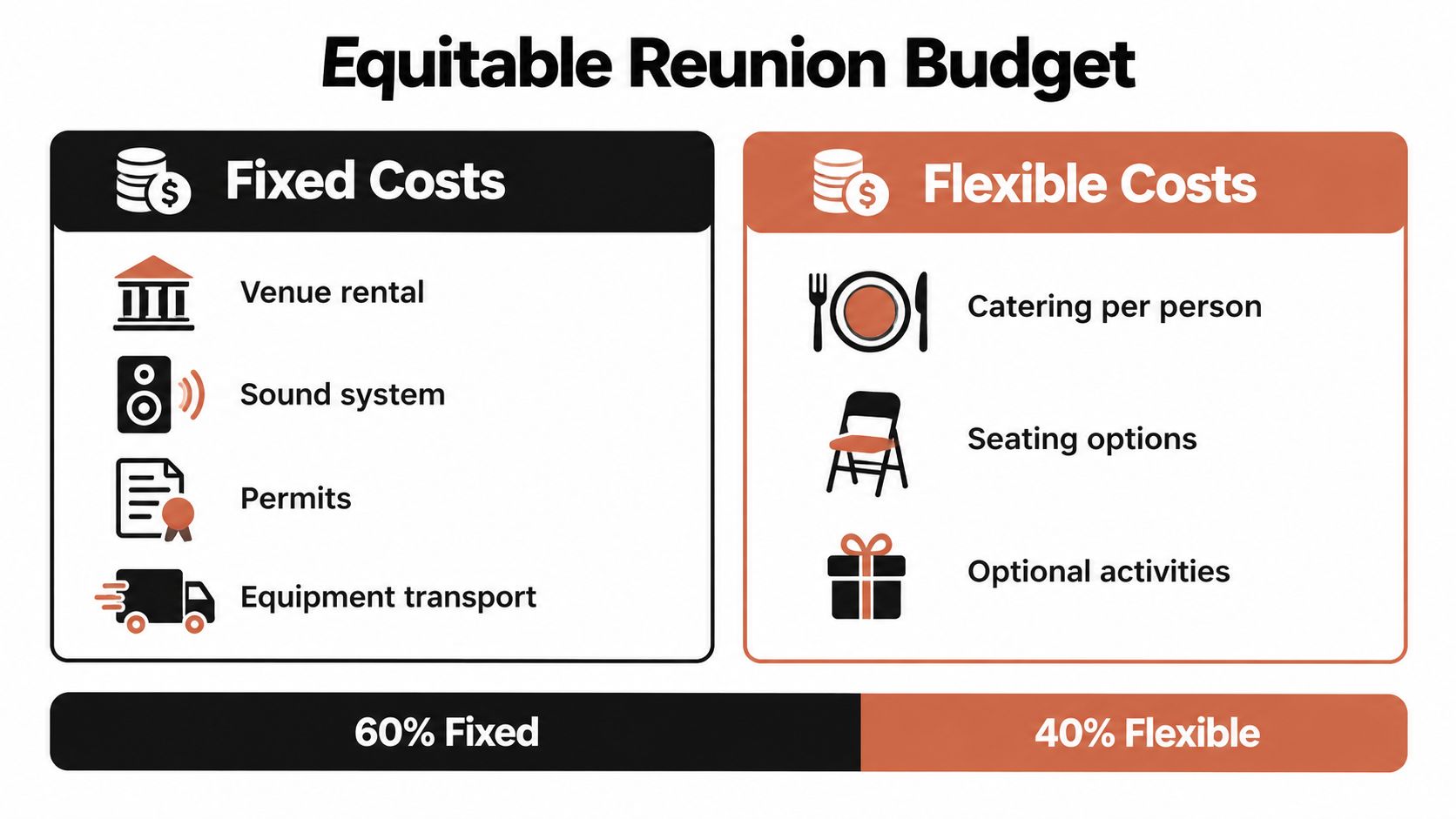
A fair reunion budget doesn't assume every household can pay the same amount. Start by separating costs that don't change much with attendance from costs that grow as more relatives join.
Fixed costs may include venue rental, permits, sound equipment, insurance, and a photographer. Variable costs include meals, supplies, and activities. That distinction helps you see which expenses need to be covered no matter how many people arrive, and which can be adjusted when the headcount changes.
Choose a baseline, then list optional upgrades
Published reunion research reports that 73% of reunions have at least 50 attendees and 35% exceed 100. It also gives an indicative basic-reunion range of $51–$99 per person, with lodging or a professional venue adding 30–50% in some plans (reunion research and planning statistics). Use those figures as a starting point for discussion, not a quote for your family: location, travel, food, and what the fee includes all affect the cost.
Present relatives with a clear low-cost baseline, such as a park gathering with a potluck, then list upgrades separately. A catered meal, a professional venue, or an organized excursion can be options rather than conditions for taking part. If lodging is involved, explain whether each household books its own room or contributes to a shared arrangement.
| Participation option | What it might include | How to keep it clear |
|---|---|---|
| Low-cost gathering | Shared outdoor space, potluck meal, simple activities | State what guests provide and what the shared contribution covers |
| Shared meal | Food, drinks, basic supplies | Publish the per-person charge and any child pricing policy |
| Optional upgrades | Catered dinner, venue add-ons, organized outing | Make each cost opt-in, not an implied requirement |
Make the payment rules easy to understand
Publish payment deadlines, refund rules, and exactly what each contribution covers before collecting money. A contribution-band approach can give relatives a way to help at different levels without asking anyone to disclose their finances publicly. Name a confidential contact for hardship requests, and consider anonymous sponsorship if family members offer to help cover another household's costs.
The fairest plan isn't always an equal bill. It's one relatives can understand before they commit, with meaningful ways to participate even if they skip optional expenses.
Designing the Day Around Capacity and Generations
A good schedule doesn't march everyone from one activity to the next. It gives the family a few shared moments and enough room for people to catch up, take a break, or choose something that suits their energy.
Capacity comes first. Check the venue against your maximum expected headcount, not just the likely average. Confirm occupancy, toilets, parking, meal service, accessible routes, weather shelter, and emergency contacts before you sign. Ask where guests will gather if the outdoor plan changes, and who at the venue can help resolve a problem.
Research summarized by Genealogy.com found that more than 70% of respondents devoted two or more days to their reunion, while 46.2% of families met annually (Genealogy.com's reunion research summary). If relatives are traveling for a multi-day gathering, include arrival and farewell time rather than squeezing everything into one main afternoon.
Build parallel options into the program
Give relatives choices that happen in the same place, rather than requiring every generation to enjoy the same activity. Set aside a quieter area for conversation, offer a child-friendly activity, and make sure guests with limited mobility can take part without a long walk. Protect an unstructured buffer; the conversations people came for often happen between scheduled activities.
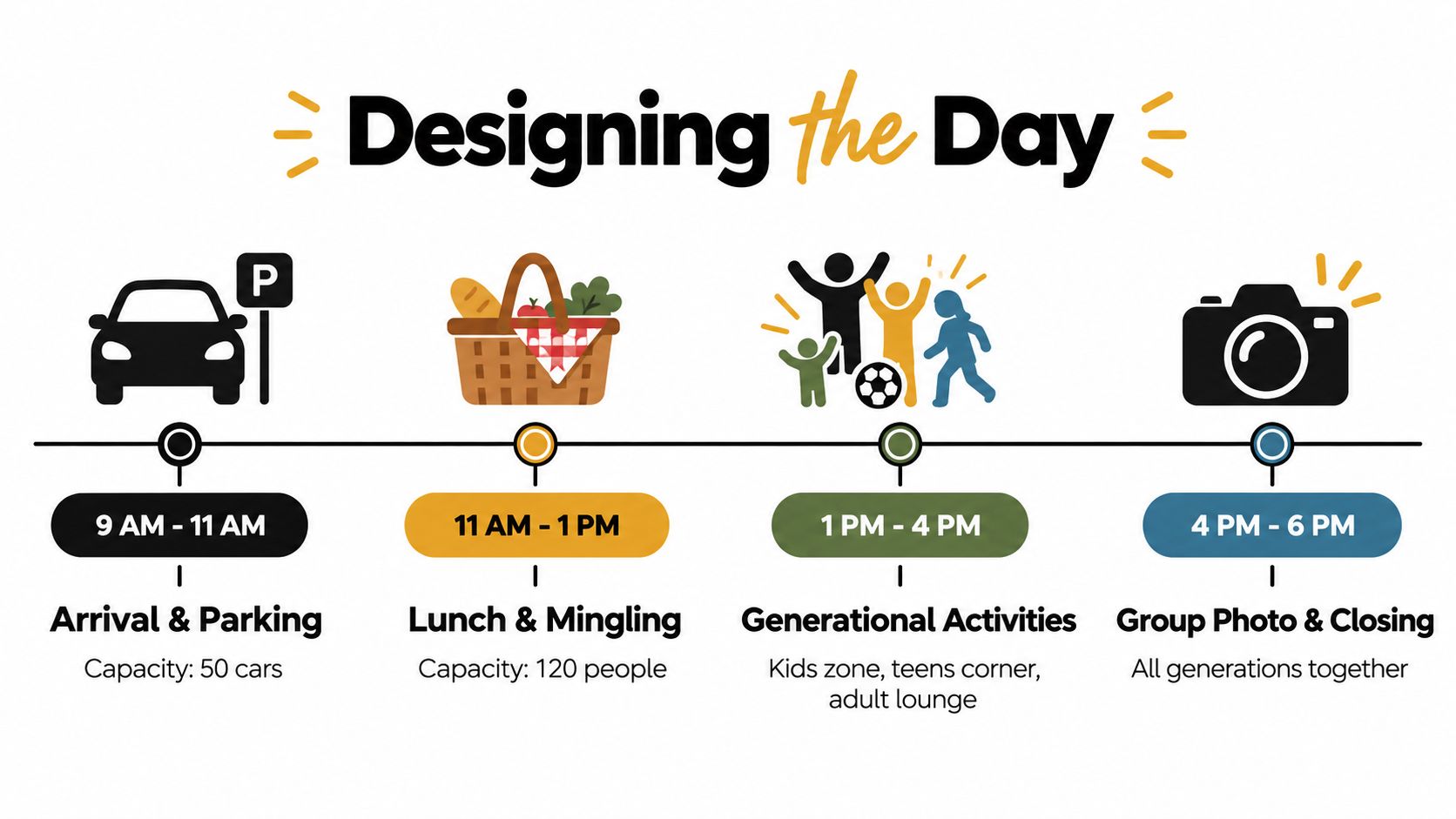
A simple day plan might look like this:
- Arrival and check-in: Direct guests to parking, welcome signs, and a shaded or indoor waiting area.
- Meal and mingling: Keep food service accessible and leave room for relatives to sit together.
- Activity choices: Offer a family-history table, a child activity, and a low-key social space at the same time.
- Shared close: Schedule a family photo and a brief farewell, then leave time for departures.
Give one person day-of authority
Name a day-of coordinator who has the master contact list and can pause an activity, close check-in, or activate the weather plan. Send changes through one designated channel, rather than asking every relative to interpret a flood of texts.
Use the family reunion event schedule video as a prompt for discussing how to pace the day. Adapt any suggested activity to your actual venue, guest needs, and schedule.
Planning Accessibility Beyond Ramps and Restrooms
A venue can have a ramp and accessible restroom and still be hard to use. Long walks from parking, loud music, unreadable signs, hot exposed seating, or nowhere to rest can shut relatives out of the gathering even when the building meets basic access needs.
Accessibility belongs in the RSVP process, before you choose the venue. Planning guidance on reunion program flow also emphasizes needs beyond mobility, including hearing, vision, dietary, cognitive, and chronic-illness considerations (family reunion accessibility guidance).
Ask privately and plan for the whole route
Include an optional, confidential accessibility intake in the RSVP. Ask whether guests need room for mobility aids, hearing support, visual navigation, food-allergy information, medication breaks, quiet space, shade, or seating near restrooms. Make clear who will see the responses and how they'll be used.
Then map the guest experience from arrival to the last activity. Check the route from parking to seating, look for uneven surfaces and long distances, and make sure the planned gathering areas have places to rest. Provide large-print and digital information, use microphones where guests need them, caption spoken material when appropriate, and label food clearly.
Assign a person to own the details
Designate an accessibility coordinator who can confirm arrangements with the venue, communicate discreetly with relatives, and respond to unexpected needs on the day. That person shouldn't have to guess whether a quiet area exists or whether a menu label covers an allergy. If relatives are also planning for safer, more accessible spaces at home, a guide to funding options for home modifications may help them explore longer-term possibilities.
Treat access as part of the event design, not a favor for one guest. When the venue, route, food, sound, and information work for more people, the reunion gets easier to enjoy for everyone.
Collecting Every Photo and Video in One Place
The reunion may end on time and the meal may go smoothly, but the memories can still scatter across phones, group chats, and cloud accounts. Set up one collection point before guests arrive, and tell everyone how to use it while they're already looking at the invitation.
For example, family picture-sharing options can help you compare ways to gather photos in one shared place. With EventUploader, organizers can set up a branded upload page, share its link or a printable QR code, and let guests upload photos and videos from their phones without downloading an app or creating an account.
Set up the memory hub before reunion day
Add the upload link to the invitation and final logistics packet. Print the QR code for tables and the welcome station, then ask the host or a volunteer to explain the process once at the start of the event. Guests scan the code and upload from their phones; relatives who prefer a link can use the same page.
A central dashboard lets the organizer review what's coming in and manage uploads. When the event ends, the organizer can close uploads, download the event's photos and videos in original quality, and publish a shareable gallery on the same link. That gives the family a shared destination for memories instead of asking everyone to search their own camera roll.
| Photo source | Default location | Risk of loss | Consolidated with EventUploader |
|---|---|---|---|
| A relative's phone | Personal camera roll | Other relatives may never receive the images | Upload through the shared page or QR code |
| Family group chat | Chat history and message attachments | Photos become hard to find among other messages | Add images to one shared collection |
| Separate cloud accounts | Individual family accounts | Access depends on who owns each account | Gather files through the event upload page |
| Dedicated event upload | Shared event collection | Easier to preserve and share in one place | Review, download, and publish a gallery |
Keep the printed QR code at the welcome station even after the opening announcement. People arrive late, forget the instructions, or take more photos once activities begin. A visible reminder makes contributing simple, and a single gallery means the family archive won't depend on one organizer's phone.
Closing the Reunion and Setting Up the Next Host
The best handoff happens before the family disperses. Ask relatives to choose the next host or committee while everyone is together, and agree on a tentative date window so the next organizer doesn't have to start from a blank page.
Save the vendor contacts, final budget, attendance records, and notes about what worked in one shared reunion binder or document. Record practical details: which meal brought people together, whether the schedule left enough downtime, and which activity failed to hold interest. Be candid. The point is to help the next host spend less time repeating avoidable mistakes.
Archive the RSVP list securely, and save the EventUploader gallery link with the other family records. If someone wants to turn the gathered photos into a keepsake, a guide to how to make a family reunion video can help them shape the pictures into a recap.
Before you leave the venue, confirm who'll lead the next reunion and who'll join the planning committee. A tradition lasts longer when its practical knowledge gets passed along with the family stories.
Put the reunion plan, RSVP details, and photo-sharing instructions in one place before invitations go out. Visit EventUploader to set up a shared photo and video upload page with a printable QR code, then give every relative a simple way to contribute and revisit the memories.